Summer is a wonderful time of year for gardeners, with colourful plants and tender crops all springing into life and adding a vibrant feel to your garden.
However, this will only happen if you adhere to the advice of our experts on best to take care of your summer greenhouse plants and crops during this period.

Read on to learn more about how you should look after your garden plant life and the kind of things equipment that you may want to add to your summer greenhouse in order to make the most of the warmer weather:
The Greenhouse In Summer
Summer greenhouses can get mighty hot when the sun is out, so it is important to have measures in place to stop your crops and plants suffering in the heat.
Cultivar’s products are all equipped with our advanced automatic greenhouse ventilation systems which have been developed in collaboration with RPS; an mechanical engineering group who applied Computer Fluid Dynamic to determine the best way of ensuring air movement which will help to maintain the health of your summer greenhouse plants.
The information we received from this study has been utilised to influence the design of our greenhouse ventilation systems, which automatically open in a set temperature range. This ensures that you don’t have to worry should you be away from home for an extended period of time.
Metrolina Greenhouses Announces Summer Trials
In these instances, it is recommended that greenhouse shading is utilised as an additional measure to cool the interior. However, the major issue with shading is that it deprives your crops of vital sunlight. The greenhouse shading offered by cultivar is designed to allow approximately 55% light transmission so your crops will continue to benefit from light levels whilst also keeping the temperature down.
These can be used to monitor the temperature inside your summer greenhouse. Whilst it’s not always possible to keep temperatures below 27°C, where plant damage can occur, it is possible to achieve this by damping down the greenhouse on the hottest summer days. This will also bring up the humidity level. If you regularly see temperatures in excess of 27 degrees then shading solutions should be considered.
Simply opening the greenhouse doors will provide plenty of ventilation to seep through into the interior; providing vital cooling for your crops. Just remember to keep an eye on that thermometer for extreme temperatures being reached!
Summer Garden Greenhouse Views To Inspire You
The doors on our summer greenhouses are perfect this function, the door on our 8ft and 10ft wide greenhouse measure 2’9” in width. Double doors are available to ensure easy access to your greenhouse with large equipment such as wheelbarrows.
All Cultivar Greenhouse doors are designed with a solid aluminium frame and made with toughened safety glass. Ultimately, this helps us to ensure a long lasting product which is intended for a lifetime of hard work for either private or commercial purposes.
Another sure-fire way of protecting your summer greenhouse plants from heat damage is maintain good levels of atmospheric humidity within the structure.

Late Summer Greenhouse Gardening: Tips For A Successful Harvest
This can be achieved by regularly watering plants and dampening down floors and surfaces. We recommend that you should aim to do this at least three times a day on particularly sunny days.Greenhouses can often take a back seat during the summer months, when gardens are flourishing outside. But that doesn’t mean they should go unused. In fact, year-round greenhouses take on new roles during this time of year. Here are 4 strategies on how to use a greenhouse in the summer.
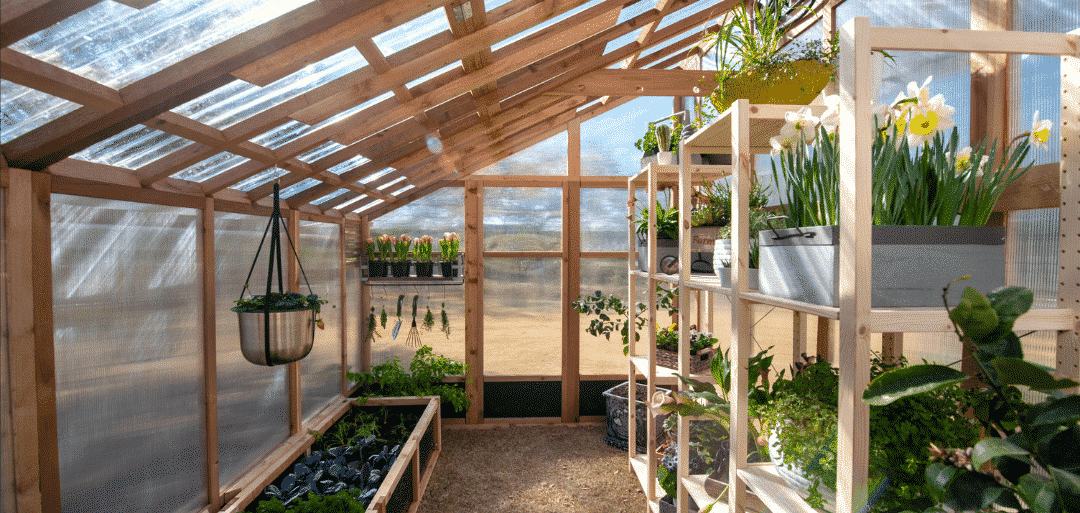
One great strategy is to use the greenhouse primarily for hot weather vegetables like tomatoes, cucumbers, peppers, and basil. While shade cloth and heat-storage systems like aGround to Air Heat Transfer (GAHT®)system can help control greenhouse temperatures, it is still a warm spot in the garden. Especially since the greenhouse may occupy the sunniest spot in your yard. We recommend taking advantage of it by shifting what you grow in there to plants that like heat and full-sun.
Many gardeners take their garden almost completely outdoors in the summer, opening up the greenhouse as a sitting area or extra living space in the summer. Some of our growers, for example, house mature citrus trees and a range of vegetables for most of the year. During the summer, it is common for these growers to move their trees, flowers, and vegetables outside and create a huge outdoor garden. This leaves generous space for morning coffee and a meeting area in the greenhouse. For greenhouses in climates with more intense sunshine, a shade cloth should be added to keep the greenhouse at a comfortable temperature for people.
Shjworks' Pop Up Greenhouses Add A Splash Of Summer To Cold Climate Cities
Other growers use measures to prevent overheating in the greenhouse and grow a wide array of crops, hot and cool in the summer. Sharon, in Boulder CO, noted of her solar greenhouse: “everything is so much healthier in there compared to my outside garden. Believe it or not, I still have spring greens, kale and chard, growing. The tomatoes, peppers, and basil are great too.” To accomplish this type of growth in the greenhouse, adding shade cloth and controlling the heat gain is critical. AGround to Air Heat Transfer (GAHT®)system is one way – it allows the greenhouse to store extra heat in the soil for heating at night.
In hot climates (places that get over 100 degrees in the summer), a year-round greenhouse with cooling systems is the only way most growers are able to grow during the summer.

An energy-efficient greenhouse provides a controlled environment to grow a wide variety of crops during the summer, including kale and chard, as well as hot weather vegetables like tomatoes, peppers, and cucumbers. A combination of shade cloth, aGround to Air Heat Transfer (GAHT®), and evaporative cooler prevents greenhouses from overheating and allows year-round growth.
Summer Greenhouse Uses
While most gardeners focus on their outdoor beds during the summer, greenhouse growers should also be preparing for their second growing season that occurs in the greenhouse. Growing year-round often requires getting plants started early, in the late summer / early fall while the days are still long enough. This allows seedlings to get sufficient light and mature before light levels wane. The healthy, mature plants continue to grow in the greenhouse through the colder months, providing a year-round harvest. If started too late, seedlings will suffer from reduced light levels and come out spindly or “leggy.”
Thus, the greenhouse is a spot for new beginnings in the summer. Growers can start crops in trays or directly in the soil, depending on their planting plan. The seeds planted for the second growing season will depend greatly on the local climate and greenhouse design. They should be planned for well in advance.
We hope this blog was helpful in providing some insight into how to use your greenhouse in the summer. For more information on climate control during warmer months, please read our blog, How Can I Keep My Residential Greenhouse From Overheating?orHow to Reduce Heat in Your Greenhouse with Shade Paint.
Cooling The Greenhouse During Summer
About us Aquaponics Build and Operations Case Studies Climate Control Commercial Design Educational Food and Growing GAHT Glazing and Materials Residential Uncategorized
In a world that is becoming increasingly urbanized and disconnected from nature, the concept of biophilia is gaining significant traction. Biophilia, a term coined by biologist E.O. Wilson, refers to the innate human tendency to seek connections with nature and other living beings. This movement to connect with the natural world has led to a renewed appreciation for green spaces, natural light, and...
At St. Thomas More School in Spokane, Washington, the community’s most significant service initiative revolves around growing food. From kindergarten to 8th grade, every student participates in planting, maintaining, and harvesting fresh produce from the school’s garden. This nourishing harvest finds its way to the on-site food bank, benefiting families in need. However, until recently, ...
Greenhouse Insulation For Winter
By: Wolf Reichard As an emerging and innovative approach to farming, indoor agriculture, also known as vertical farming or controlled environment agriculture (CEA), is receiving more and more focus. It offers a way to grow crops year-round, reduce water usage, and minimize the need for pesticides and herbicides. However, starting an indoor agriculture project can be expensive, and many potential entrepreneurs...
Wind turbine technology is a great solution for commercial greenhouse growers searching for ways to save money on energy costs and lower their impact on the environment. While it may seem financially inaccessible for smaller farms, wind energy is more affordable nowadays with easily attainable federal incentives. In this blog, we will discuss the different options available when it comes to wind turbine...
A greenhouse is an excellent addition to a school’s campus and curriculum. An educational greenhouse acts as a living classroom to provide hands-on learning that can’t be accessed in a traditional classroom setting. Educational greenhouses can be used for many different areas of study such as science, data, math, tech-ed, etc. Greenhouses and garden spaces also provide an opportunity for deeper community...

Robert Eselby: A Blooming Summer In The Uconn Greenhouses
Like any business, greenhouses should be completely prepared for any unexpected emergencies, including power outages. For commercial greenhouses, a power outage is much more than an inconvenience. The unpredictability of a power outage can throw a wrench in greenhouse operations and can lead

0 Comments
Posting Komentar